
More than physiotherapy. A rehabilitation culture.
We lead your whole therapy team — physiotherapy and occupational therapy — and use a proven culture-change approach to embed rehabilitation into everyday care, so recovery happens all day, not just in therapy sessions.
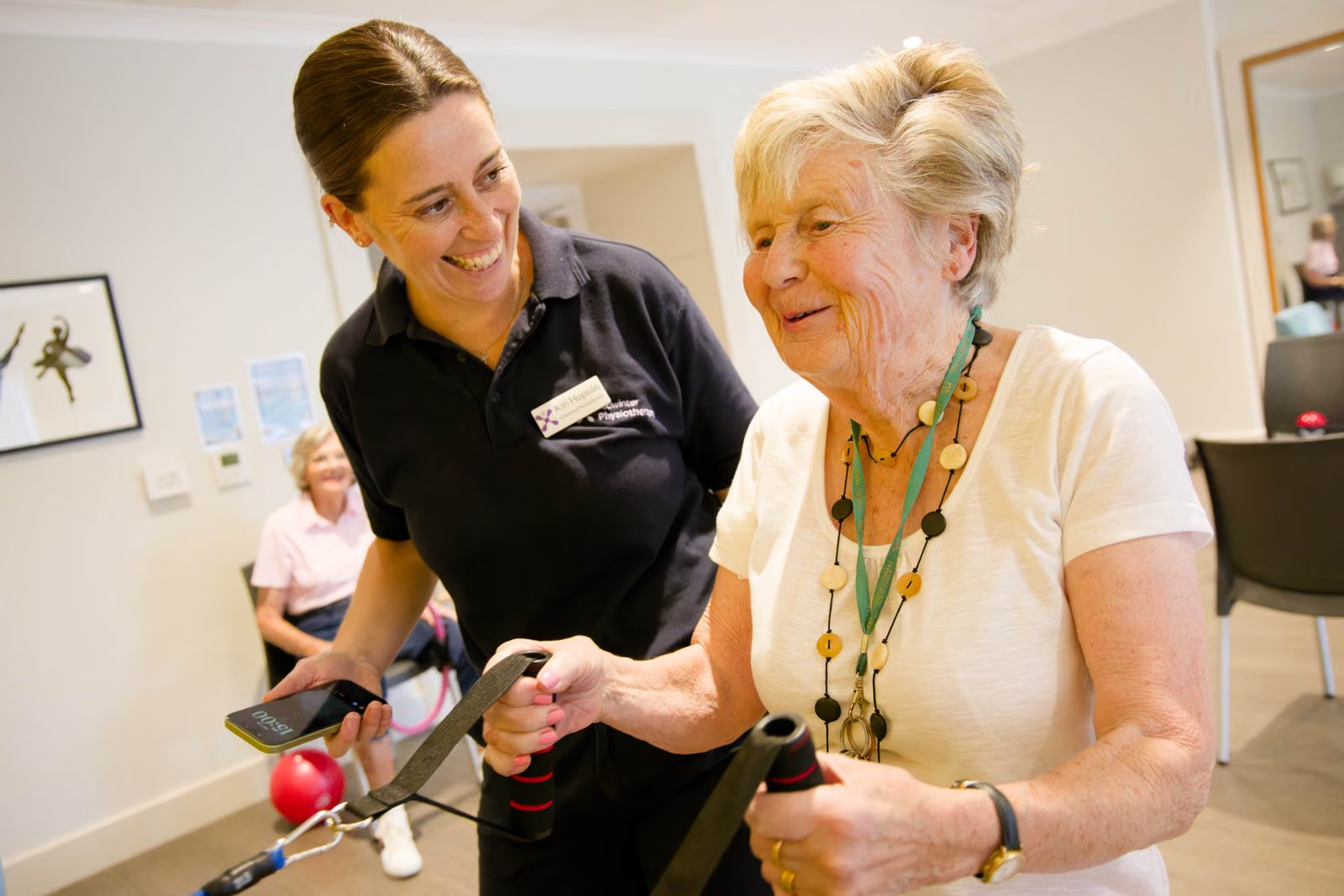
Recovery happens all day, not just in therapy sessions
Every minute matters. We work alongside your care and nursing staff so that getting up, getting dressed, walking to meals and joining in all become part of each person’s rehabilitation.
A Pathway 2 day, reimagined
- 08:00
- GOOB — get up, out of bed, get dressed, with the minimum assistance needed
- 09:00
- Breakfast Club — walk to the dining room, make a drink, prepare breakfast
- 10:00
- Dressed and up unless there's a documented clinical reason
- 11:45
- Get to Lunch — walking, transfers, sitting at a real table
- 13:00
- Planned rest — therapeutic, not unplanned inactivity
- 14:30
- Rehab groups — strength, balance, movement to music, outdoor coffee and cake
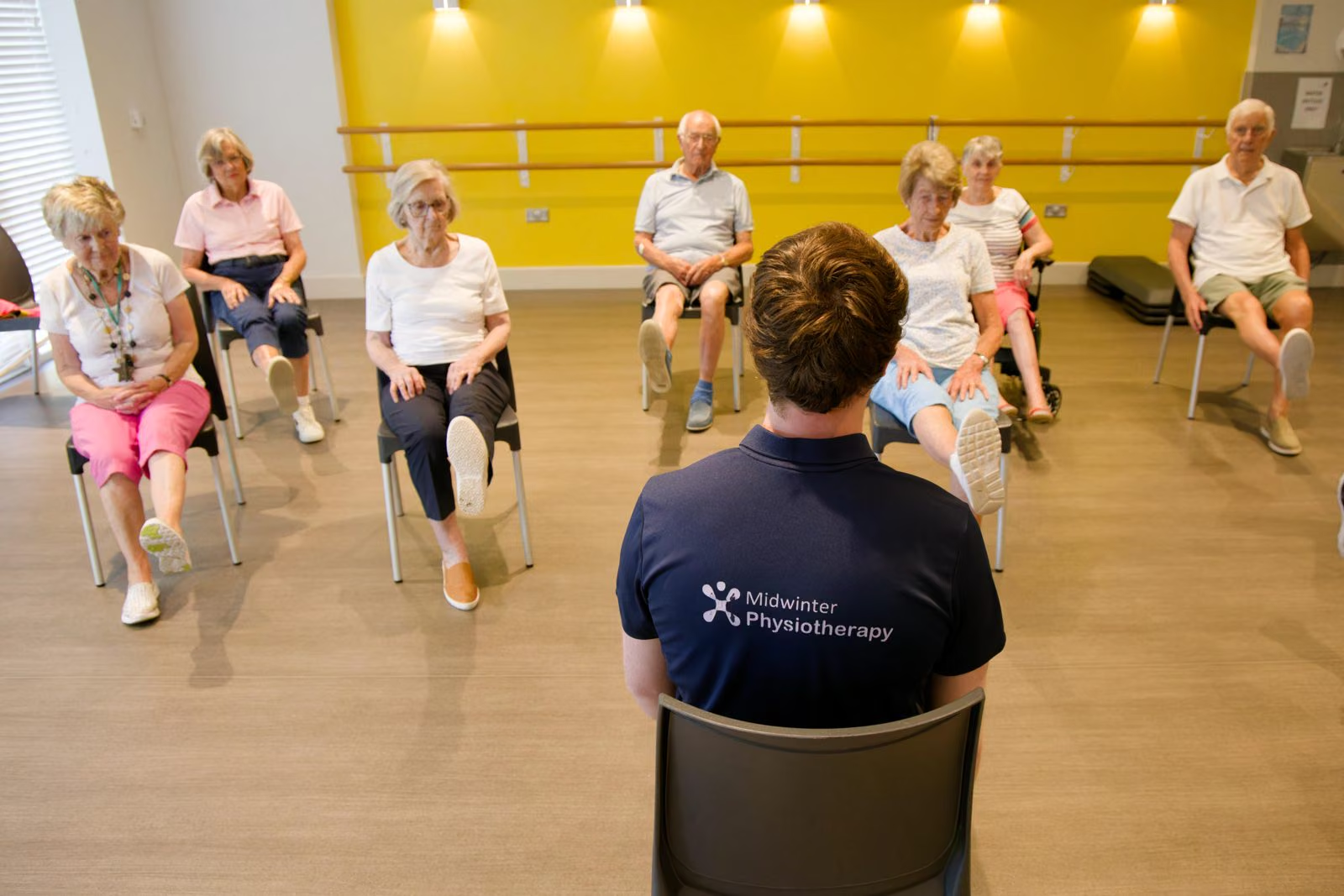
A recovery bed, not a holding bed
Pathway 2 exists for short-term, bed-based rehabilitation, reablement and recovery — for people who can’t yet safely go straight home. But when staff are stretched, routines naturally drift towards doing things for people because it’s quicker.
That isn’t a staff problem. It’s a system and culture problem — and more therapy hours alone won’t fix it. Rehabilitation doesn’t only happen when a therapist is in the room. It happens, or doesn’t, across the whole day.
Passive rehabilitation
Tasks are routinely done for the person.
- Long periods in bed or the same chair
- Not fully dressed during the day
- TV as the only activity in bedrooms
- Hoisting people who could once stand
- Families feeling they must advocate
Risk positive opportunities
Safe opportunities are deliberately created for the person to take part.
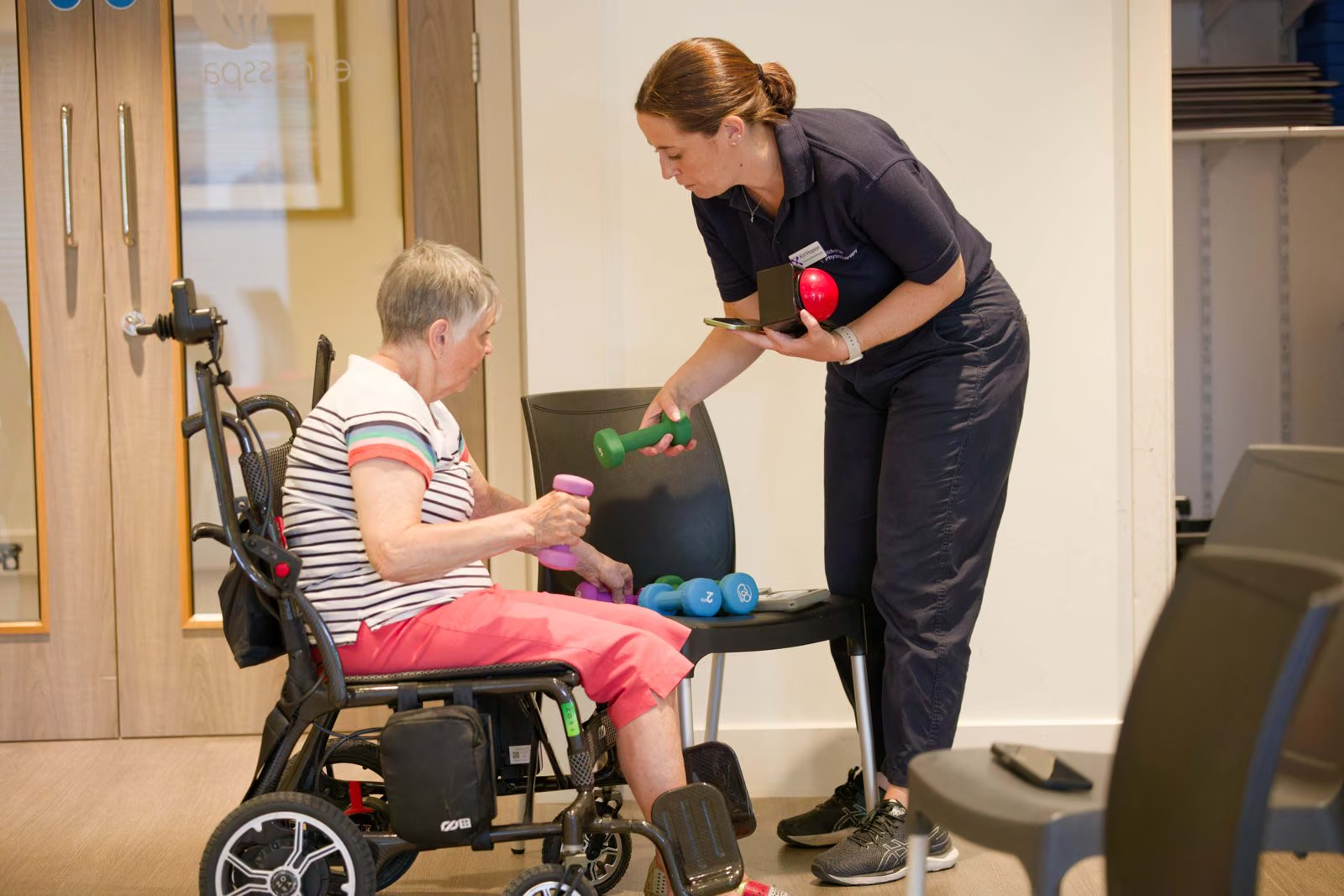
One provider for your whole therapy team — and your care culture
We don’t just add therapy hours. We manage physiotherapy and occupational therapy as one team, provide the clinical governance, and work alongside your care and nursing staff to make rehabilitation part of how the whole floor works.
The whole therapy team
Physiotherapy and occupational therapy, led and managed by us — mobility, transfers and falls alongside ADLs, dressing, cognition and equipment. One team, one plan.
Rehabilitation in the care culture
A structured culture- and behaviour-change programme that turns routine care — getting up, dressing, meals — into repeated, safe practice.
Clinical leadership and governance
Assessment, rehab stratification, clear mobility and transfer plans, escalation, positive risk management and discharge recommendations.
Measured from day one
A baseline audit before anything changes, then outcome and safety measures so you can see the impact for yourself.
Physiotherapy provides the plan. The whole team provides the opportunities.
We ran our culture change workshop with a 20-bed D2A service, led by our Neuro Clinical Lead. Care staff, activity co-ordinators and the home’s manager shared a broader vision for the service — and told us what they thought.
“Good training — how both teams need to work together to improve life of the residents.”
— Workshop participant“The training was worth it and explained the importance of this ward and encouraged teamwork and communication.”
— Workshop participant“Positive outcomes for residents and staff. Team work and independence.”
— Workshop participant“It was really helpful to hear the perspective of the care staff in a structured way. Roll out will be easier now.”
— Workshop participant“This training was worth it, I understand more and this can now help with my communication.”
— Workshop participant“Very good session, bringing people together, nice time, better future.”
— Workshop participantWhat the team expects it to change
Rehabilitation is everyone’s role. We make it workable.
Care staff are present for exactly the routines people need to regain — getting up, dressing, walking, eating, socialising. Our approach is designed with them, using established behaviour-change and implementation science.
COM-B
We diagnose capability, opportunity and motivation — skills, time, equipment, roles — rather than blaming attitudes.
NHS IMPACT
Shared purpose, people and culture, leadership behaviours, improvement capability and embedding in everyday systems.
Normalisation Process Theory
We test whether new routines become normal work — understood, owned, doable and judged worthwhile by the team.
Compassionate leadership
Psychological safety first. Barriers are welcomed as useful data, and staff are thanked for raising risks.
Short workshops. Lasting change.
Onboarding and training your care and nursing team is a required part of every service we run. It’s delivered in short, practical workshops that fit around shifts — starting with our “Making the Ward Come Alive” co-design session.
Do with, not for
Not more work — a different way of approaching the work already being done.
Shared goals. Shared skills.
From the first morning to the discharge conversation, everyone works to the same rehabilitation goals — including social care colleagues planning what happens next.
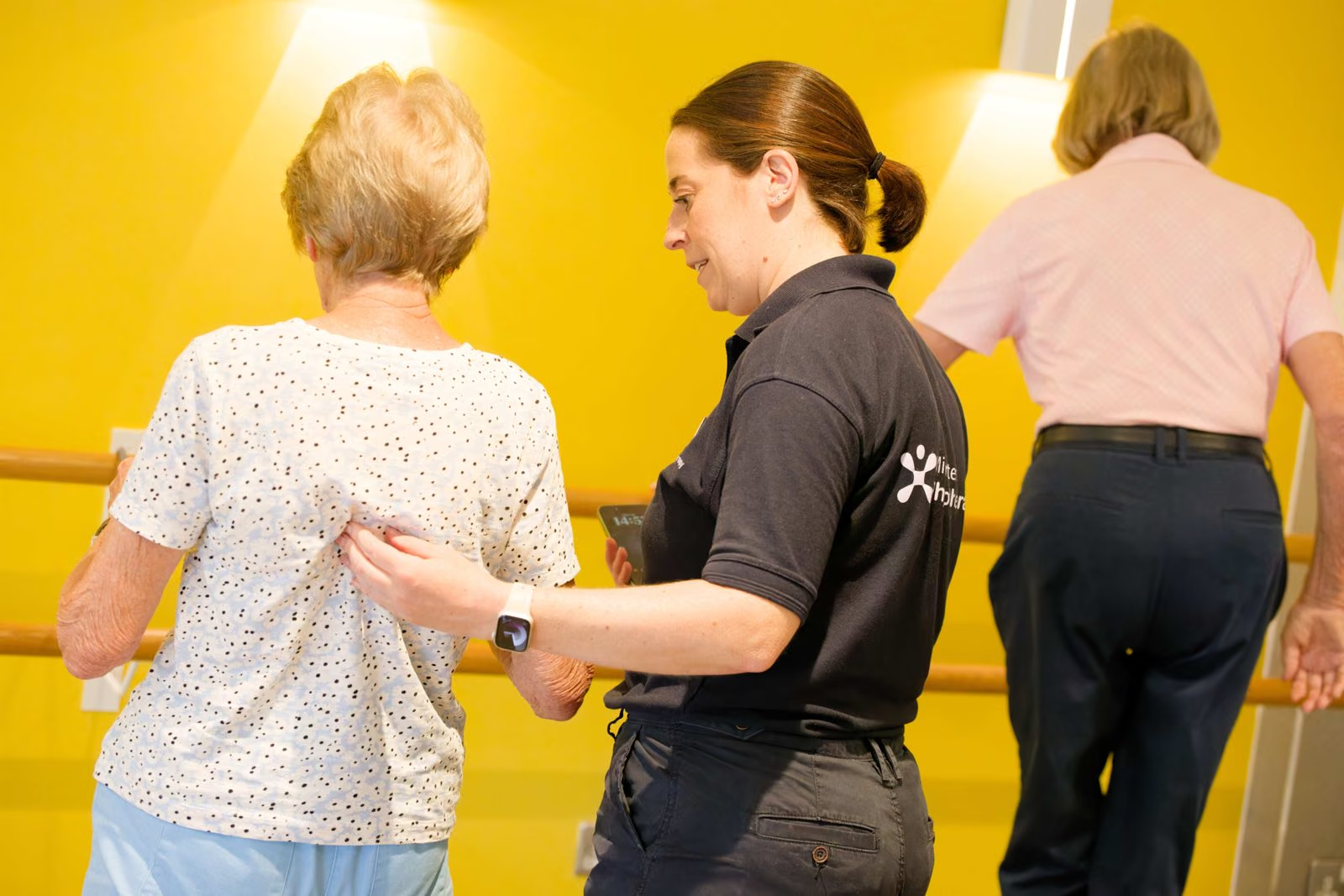
Physiotherapy
Mobility, transfers, strength, balance, falls and rehabilitation governance.
Occupational therapy
ADLs, dressing, cognition, prompting, equipment and home environment.
Nursing
Clinical stability, medication, skin, nutrition, escalation — supporting safe rehab.
Care team
Repeated functional practice throughout the entire day.
Activities coordinator
Meaningful occupation, hobbies, social and cognitive activity.
Social services
Shared discharge goals and an accurate picture of each person's long-term care needs after rehabilitation.
Students
Supervised practice, groups, audit and outcome measures.
Patients
Active partners in setting and achieving meaningful goals.
Families
Partners in planning and discharge — not substitute rehab staff.
Your pressures. Our response.
Designed around the challenges facing Pathway 2 services, and aligned with NHS IMPACT and the 10 Year Health Plan’s shifts from hospital to community and from sickness to prevention.
Safety built in: we track falls, fatigue, pain, distress, pressure damage and missed essential care alongside every outcome. Activity is never increased without regard to safety.
Rehabilitation is not just what we do, but how we think, what we say and what we enable others to do, every day.
Ready to bring your care floor alive?
Tell us about your Pathway 2 service — we’ll guide you through what rehabilitation-led care could look like for your team.